Hva er demokrati? // What is democracy?
Democracy means rule by the people. But what does it mean for a country to be democratic? Is it enough that everyone has the right to vote, or is there something more to it?
Different types of democracy
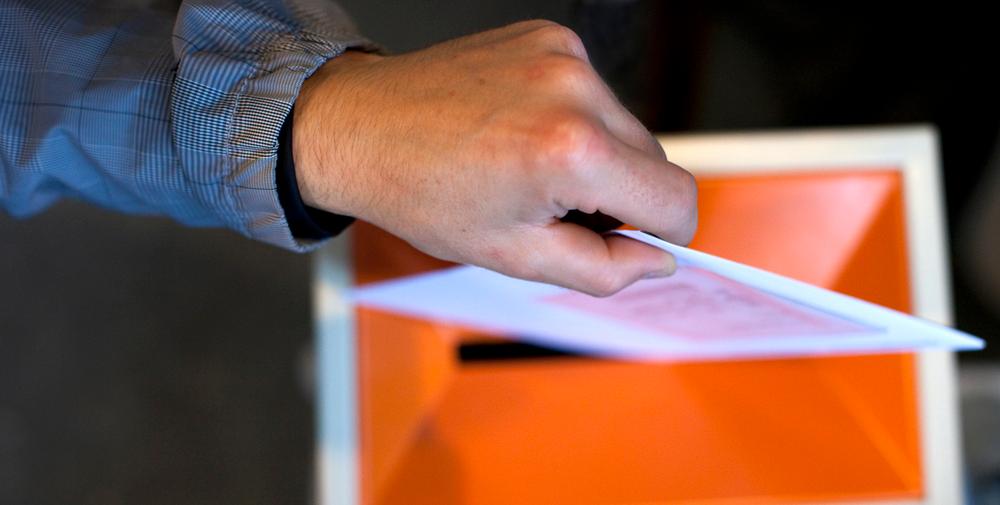
Most countries in the world call themselves democratic. Many of these countries have a democracy that functions poorly. In some cases, we can call these pseudo-democracies. These are countries that try to appear as democracies by, for example, holding elections, but which cannot be called democracies because of issues such as widespread electoral fraud, lack of political rights, or the fact that someone other than the elected officials actually governs the country.
There are two different types of democracy: direct democracy and indirect democracy (also called representative democracy).
Direct democracy
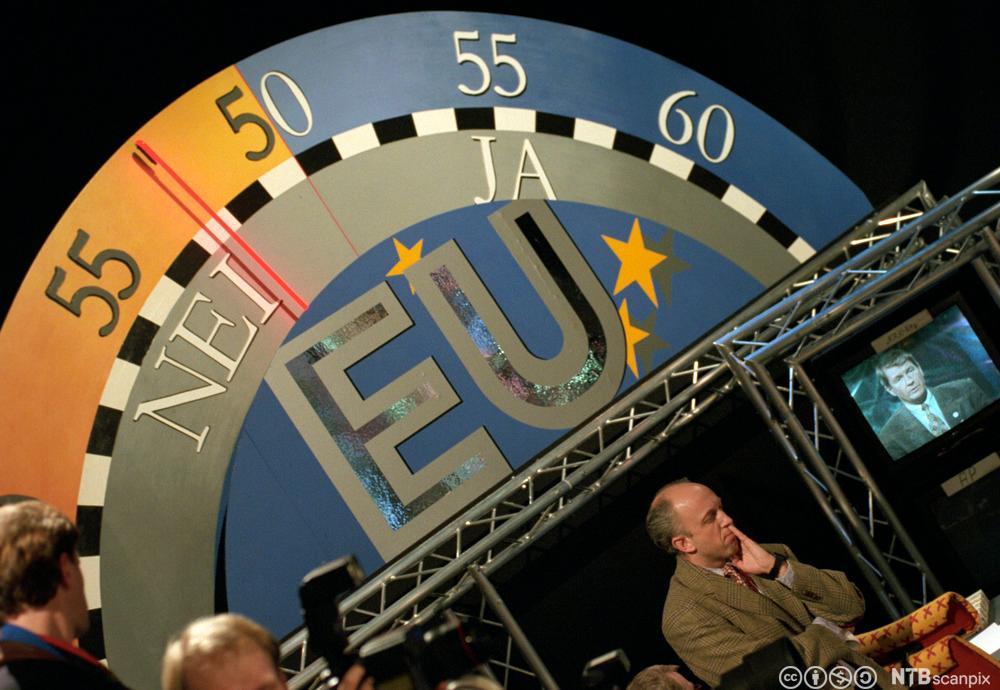
Direct democracies are democracies where political issues are decided directly by the people in referendums. Currently, no country is a pure direct democracy, but some use referendums more often than others. In Norway, a referendum was last held at a national level in 1994 when the Norwegian people voted against membership in the EU.
Indirect democracy
Indirect or representative democracy is a form of democracy in which the people elect representatives to govern the country for them. All modern democracies are governed in this way.
What makes a country democratic?
The word democracy is composed of the Greek words demos (people) and kratos (rule) and means rule by the people. The idea that everyone should be able to influence how society is governed is based on the idea that all people have equal value, as expressed in Article one of the UN Declaration of Human Rights:
“All human beings are born free and equal in dignity and rights. They are endowed with reason and conscience and should act towards one another in a spirit of fraternity” (Universal Declaration of Human Rights, 1948, art. 1).
In this text we primarily refer to democracy as a form of government in a country. We can also find democracy, or something similar to it, in sports clubs, businesses, at school, in the family, and among friends.
Most people probably associate the word democracy with countries that have political elections with voting rights for all adult citizens. But what does it mean for a country to be ruled by the people? To find out, let’s take a closer look at three important principles that must be in place for a country to be able to call itself democratic:
- equal democratic rights
- equal democratic opportunities
- protection of the interests of individuals and minorities
Equal democratic rights
The most fundamental aspect needed for a country to call itself democratic is that everyone has equal democratic rights. “Everyone” usually means all adults who are citizens of the country. Equal democratic rights are ensured through the right to vote, freedom of expression and freedom of association.
The right to vote
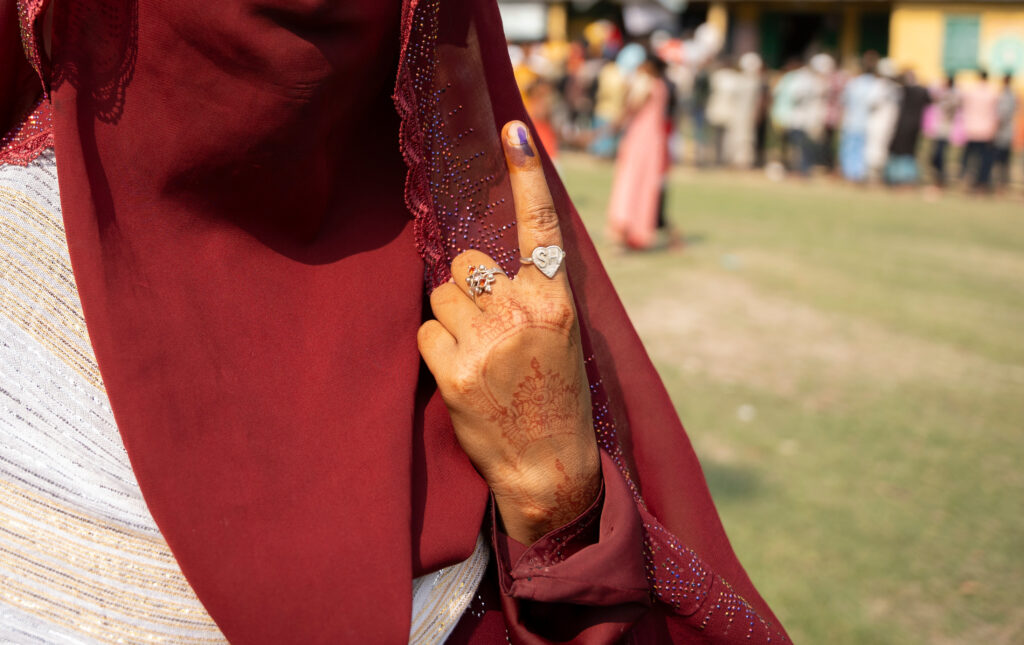
Voting is perhaps the most central political right in a democracy. In Norway, for example, all Norwegian citizens over the age of 18 have the right to vote in parliamentary elections. There are many examples of different groups in society not having the right to vote. For example, women, the poor, and different ethnic groups have been banned from participating in elections in most countries in the past – including Norway. In some countries, this is still the case. Such restrictions on the right to vote make a country less democratic.
For the right to vote to have any meaning, it is important that the election is organised in a way that is democratic and fair. In addition, there must be arrangements that prevent cheating and manipulation, so-called election fraud. The result of the election must also have significance for the politics of the country. This means that the elected officials must have power. It is no use having political elections if someone other than the elected officials hold the real power in the country.
Freedom of expression and freedom of association
Political influence is more than just the right to vote. Everyone in a democracy has the right to get involved in politics, regardless of age. One can write editorials in a newspaper, take part in a demonstration, start a petition, join a trade union or a political party, and run for office as a politician. To ensure this, we have freedom of association and freedom of expression. These are rights that everyone has in a democracy.
Equal democratic opportunities
A well-functioning democracy must aim for as many people as possible to participate in democracy. When you vote in a political election, you are in principle giving up power to those you vote for for set a period of time. In Norway, these periods are four years. This means that those who are elected get more power than others, but to prevent elected officials from abusing the power they are given, it is limited.
To ensure the greatest possible fairness of democratic opportunities, we must get as many people as possible to participate in democracy while at the same time limiting the power of elected officials. There are several ways to do this. We will look at some of them.
Increased voter turnout
Even though everyone has equal rights to participate and influence politics, that does not mean that everyone does so in practice. People can choose not to vote in elections. In the 2021 general election, over 20% of eligible voters did not exercise their right to vote. In practice, it is difficult to get everyone to vote, but it is a goal for a democracy like Norway, that as many people as possible vote in elections.
Knowledge and access to information
In order for people to understand the political system and stay up to date, knowledge and access to information is necessary. In some countries, it is difficult to achieve democracy because of high levels of illiteracy, which means many people cannot read or write. Therefore, the right to education is an important prerequisite for a democracy to function.
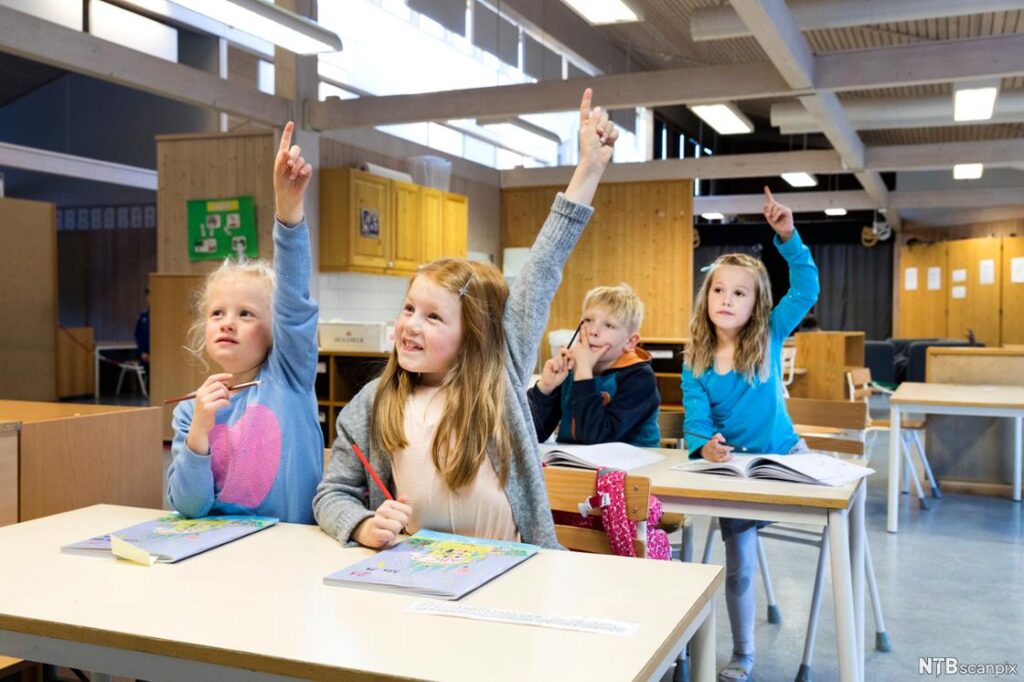
In addition to going to school, one must also be able to understand the politics in the country. A democracy needs free and independent media that can report on what is happening, convey different opinions, and expose objectionable matters in society without being censored. When everyone has access to school and the media, everyone also has the opportunity to participate in democracy.
Separation of powers
Members of parliament and government have more political power than most people. This is how it should be in a representative democracy where we elect someone to govern the country on our behalf. But there are several ways to limit this power so that we avoid abuse of power. Most democracies follow the so-called principle of separation of powers. This means that the state’s most important tasks are divided between three different institutions.
|
Type of power |
Duty |
Institution |
|---|---|---|
|
Legislative |
Approve laws and budgets |
The elected assembly (in Norway: Stortinget) |
|
Executive |
Ensure that what the legislative branch decides is implemented |
The government |
|
Judgement |
Interpret the laws and judge according to the laws |
The courts |
The division of power between different people or institutions is often used in other areas than just this three-part division of the state. In Norway, for example, we have delegated some of the local power to local boards in municipalities and county councils. The opposite of such a division of power would be a dictatorship, where all power lies with one person.
Preventing corruption and breaches of impartiality
If someone gains a lot of political power because they have a lot of money or because they are close friends or family with someone in government, it can be a problem for democracy. Imagine a rich business leader giving politicians money to vote for an issue that the company wants to make money on. This is called corruption and is illegal. A well-functioning democracy has little corruption.
If a politician makes decisions in order to benefit themselves, a close friend or a family member, the politician commits a breach of impartiality. For example, if a case comes up on the Minister of Industry and Trade’s desk in which a close friend or relative is involved, the minister must declare himself/herself incompetent. This means that he/she states that he/she cannot handle the case due to too strong ties to someone who is somehow involved in the case. If someone in the government does not report such cases, and thus violates the impartiality rules, it often leads to him/her having to leave the government. In serious cases, it can also be punishable.
Laws against corruption and breaches of impartiality are intended to prevent someone from gaining a lot of power just because they have a lot of money or because they know someone with power.
About the content of the film below
The short film below addresses issues of impartiality and trust in politicians. The film is in Norwegian, but here is an explanation of the content:
Imagine that a highway is being built where you live. This road is going to go right through the garden of the mayor’s brother. Suddenly the mayor changes his mind and says no to building the road. He says it is because the road is bad for the environment. Now it is difficult to know whether the mayor says no to the road to protect the environment, or whether the real reason is to protect his brother’s garden. Because of this uncertainty, the mayor is incompetent in the matter, and therefore cannot handle the highway case. The municipality must find someone else to replace the mayor in the case. Politicians must ensure that people can have confidence that when they decide something, it is because they believe that what they decide is best for society.
Protection of the interests of individuals and minorities
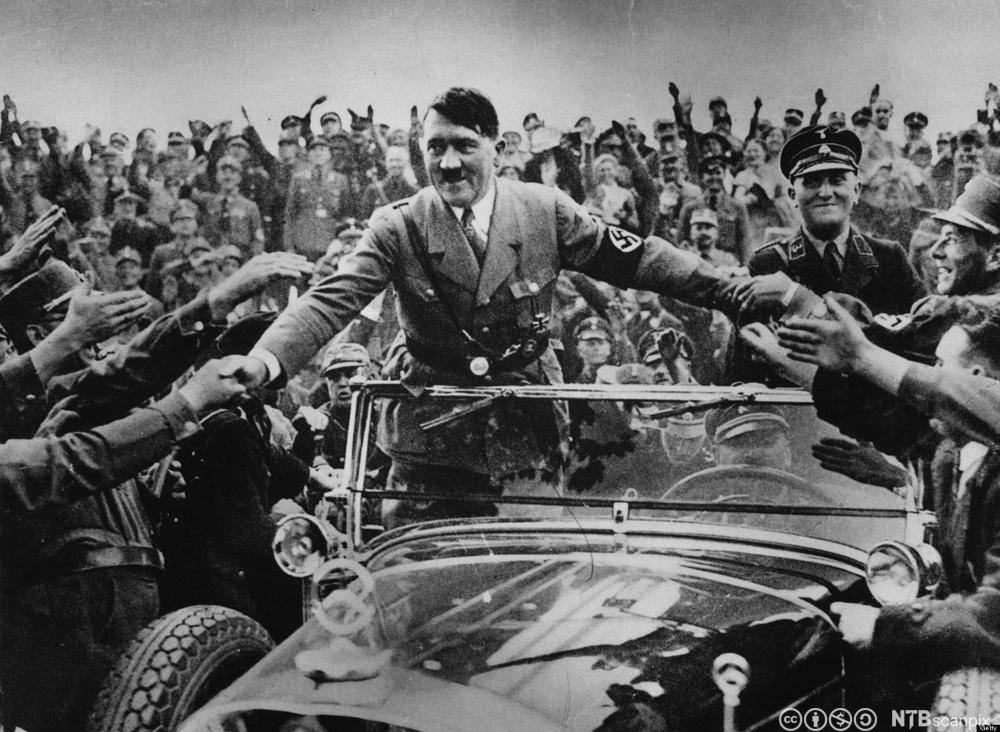
In a democracy, the majority decides. But what if the majority decides to persecute individuals or specific groups in society? Maybe someone is deprived of their home, the right to vote, freedom of speech or citizenship? Maybe someone ends up in prison or is executed without trial? Entire groups in society can be prevented from practicing their religion or culture. There have many been attempts to wipe out minority groups. All of this is happening today in several countries that call themselves democratic. Therefore, individuals and minority groups need rights that will prevent abuse and discrimination.
Legal certainty
The rule of law is an important principle in a democracy and should protect individuals from being wrongfully convicted or subjected to illegalities. Here are some of the principles that should be in place to have the rule of law:
- All decisions made by authorities must follow the laws of the country.
- You cannot be punished without a trial.
- You have the right to have your case tried in a neutral court.
- You are presumed innocent until proven guilty.
- Everyone is equal before the law; there should be no unfair discrimination.
- All parties to a case must have the opportunity to express their opinion on the matter.
Rights that protect minorities
In the UN’s human rights, the protection of minorities and vulnerable groups is central. Indigenous peoples have special protection. Indigenous peoples are groups of people who are distinct from the majority in a country, and who have existed in the country long before national borders and states were established. Indigenous peoples have usually been subjected to discrimination and abuse from authorities and the majority population. Indigenous rights are intended to ensure that such discrimination and abuse does not occur, and to help indigenous peoples preserve their own culture and language.
In Norway, we have one indigenous people: the Sami. But we also have five so-called national minorities: Kvens/Norwegian Finns, Forest Finns, Jews, Roma and Romani people/Taters. These are ethnic groups with their own culture who have long-standing ties to a country. National minorities have some of the same rights as indigenous people, but indigenous people have stronger protection in some areas.
In a democracy, no one should be subjected to discrimination or persecution for any reason. In Norway, we have our own laws that protect us from being discriminated against on the basis of, for example, religion, ethnicity, gender, sexual orientation, gender identity or disabilities.
Rights that protect minorities are necessary to remind us of the very foundation of democracy, namely that all people are born free and with equal human dignity and human rights.
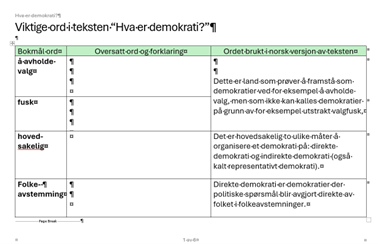
The assignment contains key words in the Norwegian text.
- Translate the words using LEXIN or another method.
- In the right column, the word is used in a sentence found in the text. Translate or explain what the sentence means.