Parlamentarisme // Parliamentarism
The “Stortinget” building is the headquarters of the Norwegian parliament, where elected politicians gather to pass laws and budgets. “Stortinget” is the parliament of Norway. The statue in front is of Johan Sverdrup. He was Prime Minister from 1884. He led the first Norwegian government that depended on a majority in the parliament that supported the government.
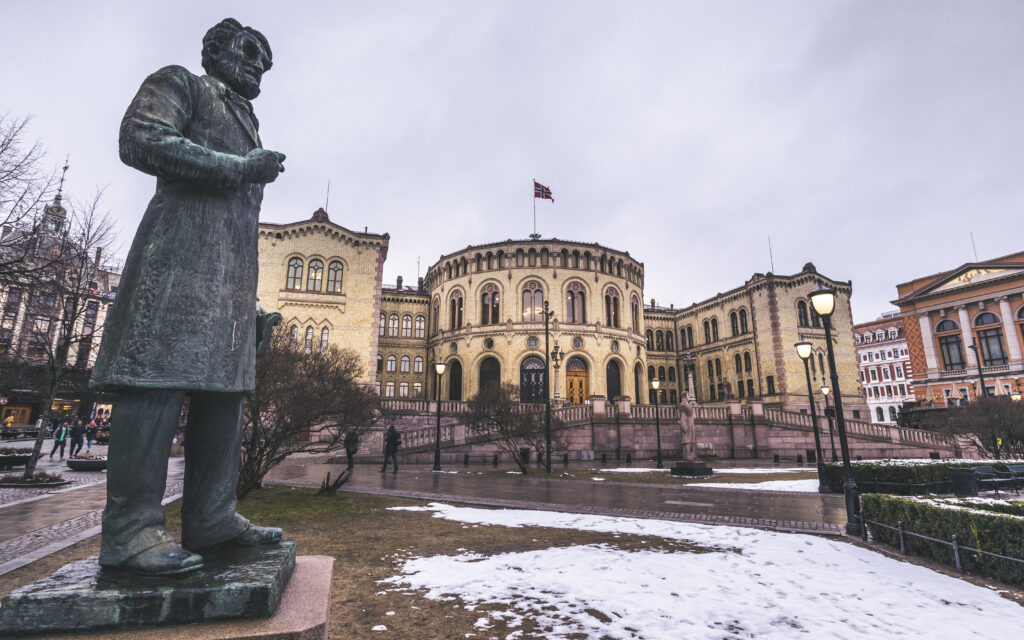
Did you know that the government must resign if the parliament loses confidence in it? In Norway, we have parliamentarism, a system that gives the parliament the power to dismiss the government.
The word parliamentarism comes from the word parliament, which means national assembly. The “Stortinget” is Norway’s national assembly, and has a prominent role in the parliamentary system. The government must have the confidence of the majority in the parliament in order to govern.
The government is based in the parliament. Every four years, general elections are held and the people choose which 169 representatives will sit in the parliament. It is the composition of the parliament and the size of the parties that determine which government we get.
Negotiations on government after an election
In Norway, it has been a long time since one party alone had the majority of seats in parliament. Therefore, several parties usually have to cooperate and form a so-called coalition government. Often, the parties have made agreements in advance about possible cooperations to form a government, but it is only when the election results are clear that negotiations between the parties begin.
When a viable alternative government is ready, the Prime Minister appoints his or her government. The members of the government in the Norwegian governments are called ministers or state ministers. A member of parliament who joins the government must leave his or her seat in the parliament and is replaced by a deputy from his or her own party and electoral district. No one can sit in both the government and the parliament. This is related to the division of power in Norway, and is central to understanding how Norwegian parliamentarism, and the relationship between the parliament and the government, work.
Majority governments
A majority government is characterised by the fact that it consists of parties that have the majority, that is, at least 85 of the seats in the parliament. Erna Solberg’s government in 2017, consisting of the Conservative Party, the Progress Party, the Liberal Party and the Christian Democratic Party, is an example of a majority government. As a majority government, it only needs the votes of its own party members in the parliament to have proposals passed.
Majority governments can therefore be almost certain that their proposals will receive a majority in the parliament. In periods of majority governments, much of the power therefore lies with the government, while the parliament often only makes minor adjustments to the proposals. This does not mean, however, that the opposition in the parliament does not have power. Even in periods of majority governments, one of the parliament’s most important tasks is to check that the government – as the executive branch – follows up on the parliament’s decisions.
Minority governments
The governing parties do not need to have a majority of the seats in the parliament. A minority can also be the starting point for a government, as long as this minority does not have the majority against it. Such a government is called a minority government.
Erna Solberg’s government (from 2013) was a minority government. In the first four years, it consisted of the Conservative Party and the Progress Party, but in 2018 the Liberal Party also joined the government. Together, the three government parties had only 80 representatives in the parliament after the 2017 election. They were therefore dependent on support from other parties to obtain a minimum of 85 votes and secure a majority for their proposals.
Motion of no confidence as a means of pressure
Both the parliament and the government have pressure tools that they can use against the other. A motion of no confidence is the parliament’s strongest pressure tool, and can be used if the parliament does not have confidence in the incumbent government.
A motion of no confidence can, for example, be tabled if the parliament discovers that the government has withheld information or spoken untruthfully to the parliament. If a majority in the parliament votes in favor of such a motion, the government must resign.
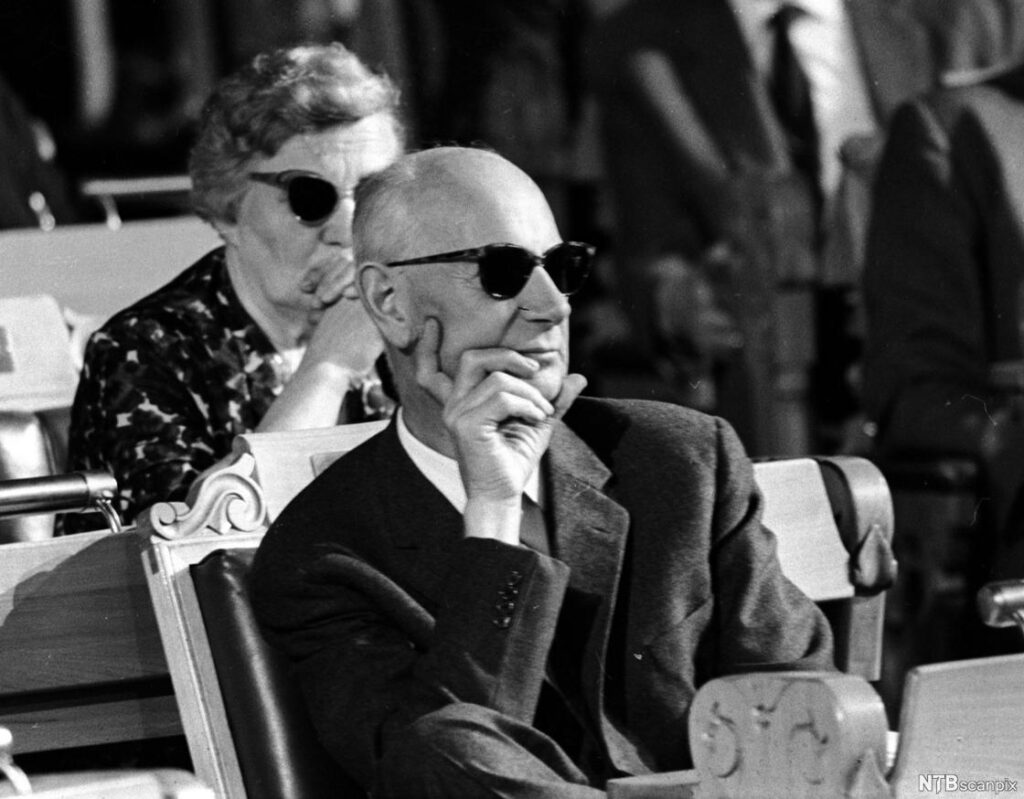
Majorities for no-confidence motions in Norway are rare and have not happened since the Gerhardsen government had to resign in 1963. But it still happens from time to time that the opposition threatens to bring forward – or does bring forward – no-confidence motions. In other words, it can function as a means of pressure even when it does not lead to the resignation of a government.
Votes of confidence and new elections
Votes of confidence are the government’s strongest means of exerting pressure on the parliament. When the government demands a vote of confidence, it is in effect issuing an ultimatum and threatening the parliament with resignation if it does not get a majority on a particular issue. In 2000, the Bondevik government had to resign after it failed to gain support from the parliament majority in a vote of confidence on the issue of gas power.
If a government resigns as a result of a motion of no confidence or a vote of confidence, a new government must be formed by the current parliament. Unlike in many other countries, the Norwegian Constitution does not allow for the dissolving of parliament and for the calling of new elections between the ordinary parliament elections.
It is not always the case that the opposition wants to take over the government in the middle of a parliamentary term. In some cases, this can contribute to the parliamentary majority allowing a government to remain in office. However, submitting a motion of no confidence or a motion of confidence is a big chance to take.
The assignment contains key words in the Norwegian text.
- Translate the words using LEXIN or another method.
- In the right column, the word is used in a sentence found in the text. Translate or explain what the sentence means.
Det er mulig å skrive ut eller bruke innhold fra dette innlegget på flere måter.
Legg merke til at innhold kan være ulikt lisensiert.
Regler for bruk av teksten
Teksten er hentet fra: Stortinget. (2020, 17. mars). Parlamentarisme. NDLA. https://ndla.no/r/samfunnskunnskap/parlamentarisme/55f5d5ad6e
Denne teksten har lisensen CC BY-NC-SA 4.0. Denne lisensen gir deg rett til å dele og bruke dette innholdet på visse vilkår:
- Du må alltid oppgi hvem som har laget innholdet.
- Du kan bare dele innholdet med samme lisens som det opprinnelige innholdet.
- Du kan ikke benytte materialet til kommersielle formål.
Regler for bruk av bilder i teksten
Bildene i denne teksten kan ha ulike lisenser. Les mer om hvert bilde.
 AdobeStock_254041398-1024x640.jpeg — Bilde fra Ali, hentet fra
  0LCyr9EG-1024x799.jpg — Einar Gerhardsen under Kings Bay-saken, av NTB Scanpix, Aftenposten. (https://ndla.no/image/49623). CC BY-NC 4.0.
Regler for bruk av lydfiler i innlegget
Denne teksten har lisensen CC BY-NC-SA 4.0. Denne lisensen gir deg rett til å dele og bruke dette innholdet på visse vilkår:
- Du må alltid oppgi hvem som har laget innholdet.
- Du kan bare dele innholdet med samme lisens som det opprinnelige innholdet.
- Du kan ikke benytte materialet til kommersielle formål.